


EU Must Not Hold Aluminium Scrap Hostage to Industrial Policy
The EU is currently considering export restrictions on aluminium scrap leaving the Union. The aim is reasonable — to keep more resources within the EU — but the expected approach would harm the value chain and weaken the circular economy.
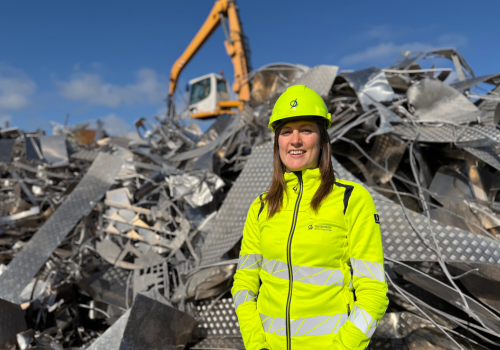
Commentary published in WasteTech by Marianne Ladekarl Thygesen, Head of Environmental Policy at HJHansen Recycling Group.
Aluminium is strategically important to the EU’s green transition. Recycled aluminium requires significantly less energy than primary production and is therefore crucial for both the climate and industry. But export restrictions do not create a single additional kilogram of aluminium scrap. They do not increase collection, and there is no guarantee that they will improve sorting technology or build new European treatment capacity. Instead, they harm the part of the value chain that is already delivering on the circular economy.
-The EU faces a genuine challenge: Europe’s aluminium industry is under pressure from high energy costs, intensified global competition and the need to transition to lower CO₂ emissions. But if we want to keep resources in the EU, we must address the real problems rather than resort to the kind of symptomatic treatment that export restrictions would represent.
Global trade is essential for aluminium recycling
Only when aluminium scrap can move freely across borders is it possible to achieve the highest-value use. This ensures that the material can reach the markets and processes best suited to its quality.
As the European market stands today, it cannot absorb all grades of aluminium scrap. There is a mismatch between supply and demand. If an export duty is introduced, recycling companies will have fewer opportunities to sell their material. In practical terms, this will lead to lower earnings without any noticeable environmental benefit.
Developments in recycling and the requirements placed on it demand investment in new technology. The recycling industry is a major driver of this development, which makes sufficient financial capacity essential. Economic losses in the sector will set the circular economy back.
A large share of the aluminium scrap generated in the EU is already recycled within the EU, benefiting the entire sector. However, it is essential that the market be allowed to regulate itself so that aluminium is recycled where there is demand. In the EU, we have seen major industries such as the automotive sector reduce production in recent years. If this trend continues, demand will fall further.
There is still a long way to go before the EU’s aluminium sector can absorb the full volume and the entire range of aluminium scrap grades. Until that happens, there is no prospect of keeping all aluminium scrap within the EU.
We must support the aluminium sector in the EU
At HJHansen Recycling, we fully recognise the intention to strengthen the aluminium sector, but the initiatives must benefit the entire EU value chain or, at the very least, not leave parts of it worse off. Measures such as the Carbon Border Adjustment Mechanism (CBAM), which imposes a charge on imported goods equivalent to the CO₂ costs they would have incurred if produced in the EU, benefit the entire value chain — unlike an export duty.
Similarly, support for the energy transition and technological development, as well as reductions in energy taxes, can contribute to better long-term framework conditions for the EU’s aluminium industry. These are measures that we at HJHansen Recycling support.
Aluminium scrap must never be exported from the EU as a waste problem. It should only be exported for the purpose of supporting the circular economy. We therefore welcome the forthcoming requirements for audits of waste treatment facilities outside the EU before waste may be exported. A stronger focus on standards for treatment facilities outside the EU will also strengthen recycling within the EU.
The objective is more scrap in the EU, but the approach is wrong
One of the objectives of the EU Action Plan on Steel and Metals is to ensure sufficient access to scrap for EU producers. The European Commission has therefore taken on the task of proposing measures to achieve this objective.
No concrete proposals have yet been presented regarding the measures in question, but the indications are that the Commission will propose introducing an export duty.
The EU needs a strong aluminium industry. But a strong industry is not built by weakening the recycling link in the value chain. It is built by making it attractive to invest, produce and recycle in the EU. An export duty may appear decisive in the short term, but it would come at the expense of the circular economy.
Our clear appeal is therefore: abandon plans for an export duty and address the real problems so that we can build a strong aluminium sector in the EU for the benefit of the entire value chain.
Read the commentary by Marianne Ladekarl Thygesen in WasteTech here (danish)